
 Shop now, pay later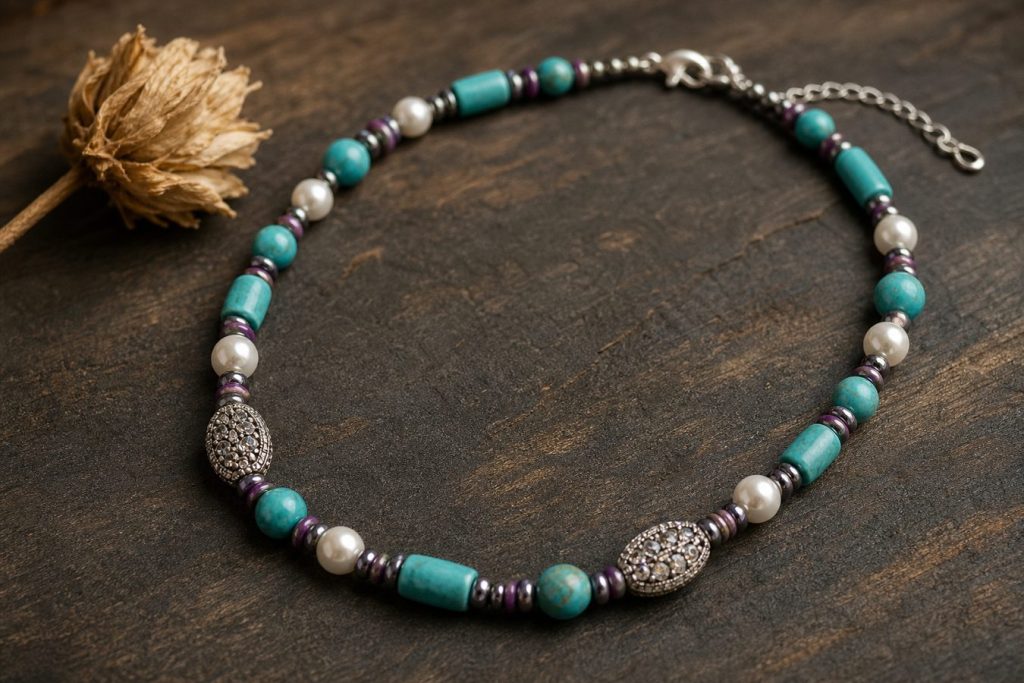
Real turquoise jewelry has been a staple of Southwestern silverwork for over a century, and at SilverRush Style we’ve been setting natural stones in sterling since 2005. This guide breaks down what makes a turquoise piece genuine, where the best material comes from, and how to care for it. If you’re shopping for authentic sterling silver jewelry with real stones, the details below will help you buy with confidence.
What Counts as Real Turquoise
Turquoise is a hydrated copper aluminum phosphate with the chemical formula CuAl6(PO4)4(OH)8·4H2O. The copper content gives the stone its blue color, while iron substitution produces greener shades. It registers 5 to 6 on the Mohs hardness scale, which is softer than quartz and the reason most cuts are protected by bezel settings.
The industry recognizes several grades of authentic turquoise. Natural turquoise is mined, cut, and polished with no chemical treatment. Stabilized turquoise is real stone infused with clear resin to harden softer material, a common and disclosed practice. Reconstituted or block turquoise is not considered genuine, since it consists of powdered stone or dyed howlite pressed into shape.
Quick Authenticity Checks
Genuine turquoise feels cool to the touch and warms slowly in the hand. Natural stones show irregular matrix patterns from the host rock, often in brown, black, or golden veins, rather than a uniform painted look. A reputable seller will name the mine or region of origin and disclose any stabilization.
Where Real Turquoise Comes From
The American Southwest produced the turquoise most associated with Native American silverwork. Sleeping Beauty mine in Globe, Arizona, became known for its clean robin’s-egg blue with little to no matrix, and the mine closed for turquoise production in 2012, which raised prices on existing stock. Kingman, Arizona, remains active and supplies a wide range of blues with black or pyrite matrix.
Nevada hosts dozens of small mines including Royston, known for blue-green stones with brown host rock, and Number 8, prized for its spiderweb matrix. Outside the United States, the Nishapur district in Iran has produced turquoise for more than 2,000 years, and Hubei Province in China supplies a large share of the global market today. Each source has a recognizable color and matrix signature, which is why origin matters when verifying a piece.
Reading a Listing
A clear product description should state the stone type, treatment status, and metal purity. Sterling silver is stamped 925, indicating 92.5 percent silver and 7.5 percent alloy, usually copper. Our collection lists these details on every turquoise piece so you know exactly what you’re buying.
Choosing Rings, Necklaces, Bracelets, and Earrings
Rings take the most wear, so look for thick bezels and a cabochon that sits low to the band. Cuff bracelets benefit from a single large stone or a row of smaller cabochons in a sturdy silver frame. Pendants and earrings can showcase higher-grade material since they see less impact than ring stones.
Color preference is personal, and there is no single “best” shade. High-blue Sleeping Beauty stones pair well with formal outfits and white metals, while green Royston or matrix-heavy Kingman pieces suit Southwestern and everyday wear. Heavier gauge silver, typically 14 to 12 gauge in cuffs, holds up better over decades of use.
Sizing and Weight
Ask for the carat weight or stone dimensions in millimeters before ordering online. A pendant cabochon of 15 by 20 mm reads as a substantial centerpiece, while 8 by 10 mm suits stud earrings. Total piece weight in grams gives you a sense of the silver content and overall feel on the body.
Caring for Real Turquoise Jewelry
Turquoise is porous and reacts to oils, lotions, perfume, and chlorinated water. Put your jewelry on last when dressing, and remove it before swimming, showering, or applying sunscreen. Prolonged contact with these substances can shift the color from blue toward green over months or years.
Clean turquoise with a soft, dry cloth or a barely damp cloth followed by immediate drying. Skip ultrasonic cleaners, steam, ammonia, and commercial silver dips, since all of them can damage the stone or wash out stabilizing resin. Store pieces flat in a soft pouch, separated from harder gemstones like topaz or sapphire that can scratch the surface.
When to See a Jeweler
If a bezel loosens or a stone shifts, set the piece aside and have it tightened before the cabochon falls out. Polishing should be done by hand around the stone, never with rotary tools that generate heat. With reasonable care, a real turquoise piece can stay in rotation for generations, which is why so many Southwestern heirlooms remain in family collections.
Real turquoise rewards attention to detail at the point of purchase and in daily wear. If you’d like to see current stones, origins, and settings, browse our sterling silver turquoise collection and reach out with any questions about a specific piece.