
 Shop now, pay later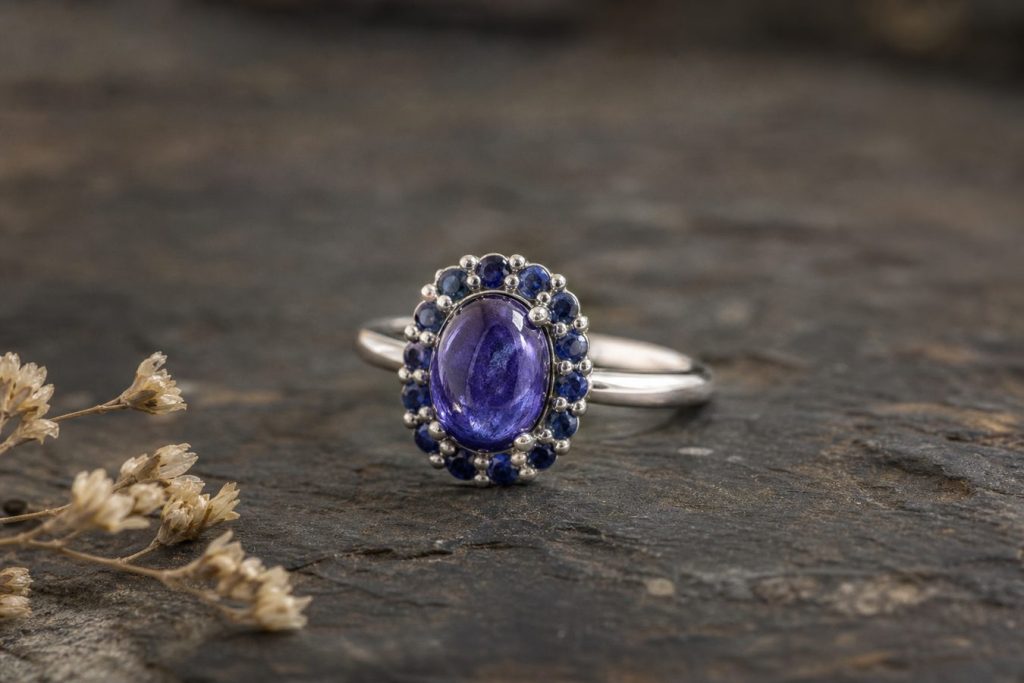
Genuine tanzanite rings hold a violet-blue gem found in only one place on Earth: a small stretch of hills near Mount Kilimanjaro in northern Tanzania. That single-source origin makes authentication, color grading, and setting choice the three things every buyer should understand before checkout. This guide covers what tanzanite actually is, how to verify it, and how to wear it without damaging the stone.
What Makes Tanzanite Genuine
Tanzanite is the blue-violet variety of the mineral zoisite, with the chemical formula Ca₂Al₃(SiO₄)₃(OH). It was first identified in 1967 in the Merelani Hills of the Manyara Region, and commercial mining still concentrates in that same 7-square-mile zone. No other deposit of gem-quality tanzanite has ever been confirmed, which is why supply is finite and provenance matters.
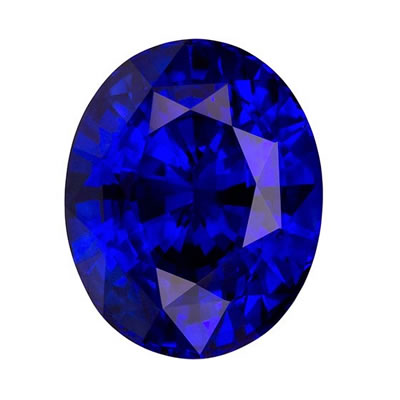
The stone shows pleochroism, meaning it displays different colors (blue, violet, and sometimes burgundy) depending on the viewing angle. Nearly all tanzanite on the market has been heat-treated around 500°C to bring out the blue-violet hue from the natural brownish rough. This treatment is stable, permanent, and disclosed as standard industry practice by the GIA and AGTA.
A genuine stone should arrive with a grading report from a recognized lab such as GIA, IGI, or AGL. The report confirms species, treatment, carat weight, and measurements, and it should travel with the ring in a sealed envelope or as a printed certificate referencing the stone’s dimensions.
How to Tell Real Tanzanite from Imitations
Synthetic forsterite and coated quartz are the two most common stand-ins sold as tanzanite online. Forsterite lacks tanzanite’s strong trichroism and shows a flatter, more uniform color under a loupe. Coated quartz often reveals a thin film along the girdle or facet junctions when examined at 10x magnification.
Three quick checks help at home. Tilt the stone under daylight and a warm bulb: real tanzanite shifts between blue and violet, while glass and most simulants do not. Weight matters too, since tanzanite has a specific gravity of 3.35, noticeably denser than glass at around 2.5.
A jeweler with a refractometer can confirm refractive indices of 1.691–1.700, which sit in a narrow range no common imitation matches. If a seller cannot produce a lab report and refuses independent testing, walk away. Reputable vendors of sterling silver jewelry set with natural stones welcome verification.
Choosing Color, Cut, and Setting
Color drives tanzanite pricing more than carat weight. The trade grades hue from vB (violetish blue) to bV (bluish violet), with saturation rated from light to deep. Stones graded AAA or “exceptional” show a deep blue dominant face with violet flashes and command the highest prices per carat.
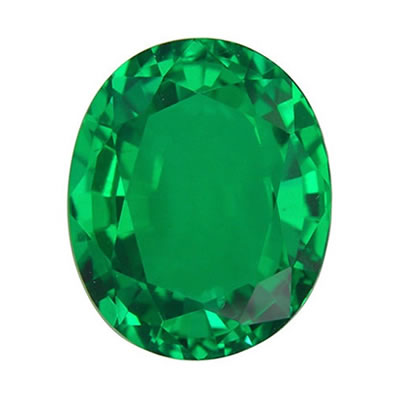
Cut affects how that color reads in the finished ring. Oval, cushion, and trillion cuts maximize face-up color in stones under 2 carats, while emerald and pear cuts suit larger rough where clarity allows longer facets. Avoid windowed stones where you can see straight through the center; that indicates a shallow cut sacrificing color for weight.
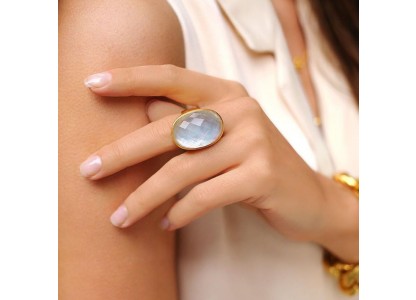
Setting choice protects the gem. Tanzanite measures 6 to 7 on the Mohs scale, softer than sapphire (9) or topaz (8), and it has perfect cleavage in one direction. Bezel and halo settings shield the girdle from knocks, while four- or six-prong solitaires expose more of the stone and require more careful wear.
Caring for a Tanzanite Ring
Skip the ultrasonic and steam cleaners that jewelry stores use for diamonds. Sudden temperature shifts and high-frequency vibration can fracture tanzanite along its cleavage plane. Warm water, mild dish soap, and a soft toothbrush clean the stone safely in under a minute.
Remove the ring before gardening, gym sessions, or housework involving bleach or ammonia. Store it separately from harder gems like diamond, sapphire, or quartz, which will scratch the surface over time. A small fabric pouch inside a jewelry box works well for everyday storage.
Tanzanite is the official December birthstone, added to the modern list by the American Gem Trade Association in 2002. It also marks the 24th wedding anniversary in newer anniversary gift guides. Both associations have helped drive steady demand since the early 2000s.
What to Expect at Different Price Points
Loose tanzanite under 1 carat in commercial grade runs roughly $200 to $400 per carat as of 2026 market reports. Stones in the 2 to 3 carat range with AAA color climb to $600–$1,200 per carat, and exceptional 5-carat-plus material can exceed $1,500 per carat. Sterling silver settings keep the total ring price accessible compared with gold mountings.
A finished sterling silver ring with a 1-carat natural, heat-treated tanzanite and a lab report typically sits between $150 and $400 retail. Anything significantly below that range warrants extra questions about origin and treatment disclosure. Anything well above should include either a larger stone, higher color grade, or designer attribution.
If you would like help matching a tanzanite ring to a finger size, birthday gift, or anniversary, the SilverRush Style team has been sourcing natural-stone sterling silver jewelry since 2005 and is happy to answer questions before you buy.