
 Shop now, pay later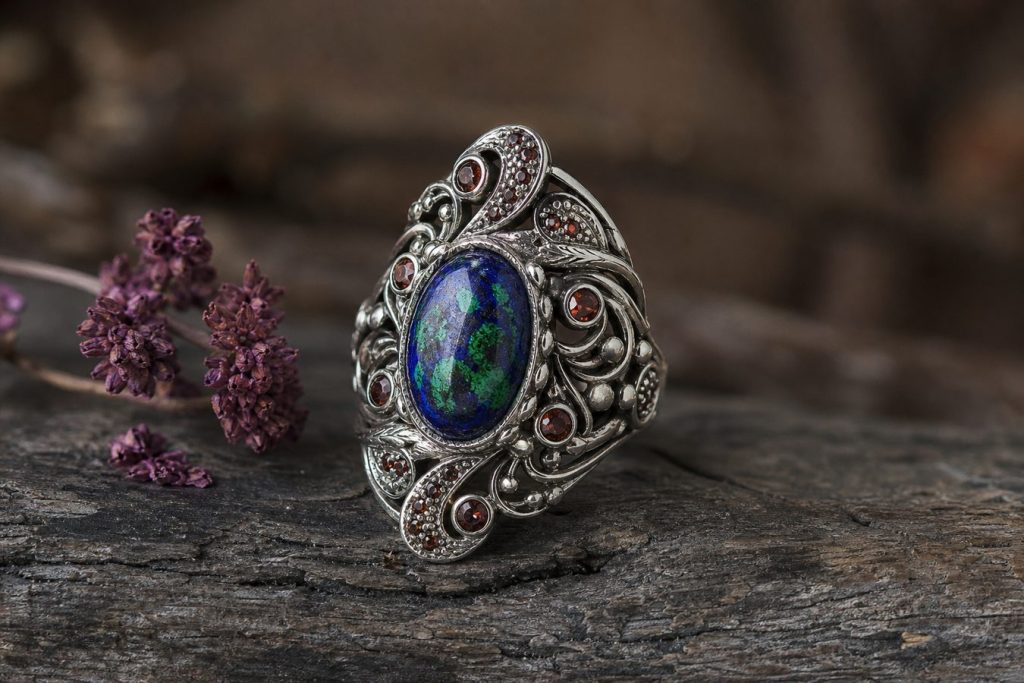
The azurite meaning centers on inner vision, mental clarity, and a connection to the third eye and crown chakras. Crystal writers often call it the Stone of Heaven, a nickname tied to its saturated blue color and long history in spiritual practice. This guide covers what the stone actually is, where it comes from, and how to wear it without damaging it.
At SilverRush Style, we’ve sold real natural-stone sterling silver jewelry since 2005, so the notes below reflect what we’ve learned from sourcing rough material and setting it in metal. Expect specifics on hardness, chemistry, and care alongside the symbolic side.
What Is Azurite? Chemistry, Color, and Hardness
Azurite is a soft copper carbonate mineral with the chemical formula Cu3(CO3)2(OH)2. It forms through the weathering of copper ore deposits near the surface, which is why it often appears alongside green malachite in the same specimen. The deep blue comes from the copper content reacting with carbonate-rich groundwater.
On the Mohs scale, azurite rates only 3.5 to 4, which makes it softer than a copper penny and far softer than quartz. It also has a specific gravity around 3.77 and a vitreous to dull luster depending on crystal habit. Historic painters ground it into the pigment once called azurro della magna, used in European panel paintings before synthetic ultramarine took over in the 19th century.
The mineral was also known as chessylite in the early 1800s, named after the Chessy-les-Mines deposit in France. Today, major sources include Morocco, Namibia, Mexico, Australia, China, and the copper belts of Arizona and New Mexico in the United States.
Azurite Meaning and Symbolic Properties
In modern crystal tradition, azurite is linked to the third eye chakra and is used as a focus stone during meditation. Writers describe it as a tool for awakening intuition, sharpening intellect, and bringing inner vision into line with spiritual guidance. The dark indigo color has long been associated with night sky imagery and reflective thought.
Ancient Egyptians reportedly used azurite to deepen priestly visions, and the Mayans connected it to mental insight. Edgar Cayce, the early 20th-century American mystic, referenced azurite in several readings, which helped popularize it within mid-century metaphysical writing. These are folkloric and historical associations, not medical claims.
When azurite occurs intergrown with malachite, the combination is called azurite-malachite. This pairing is associated with calming anxious thinking and balancing emotional flexibility, which is why lapidaries enjoy cutting it for cabochons and pendants. The contrast of blue and green in one stone makes each cut piece visually distinct.
How to Wear and Care for Azurite Jewelry
Because azurite sits at 3.5 to 4 on the Mohs scale, it works best in pieces that don’t take impact. Pendants, earrings, and brooches are safer choices than rings or bracelets, where knocks against counters and door frames are routine. Most reputable lapidaries stabilize azurite with resin to reduce chipping, and that’s a normal trade practice rather than a defect.
Keep azurite away from heat, acids, ammonia, and prolonged water exposure, since copper carbonates can alter over time. Wipe pieces with a soft dry cloth, store them in a lined box away from harder stones, and remove jewelry before swimming, showering, or cleaning. Sunlight over long periods can fade the blue, so closed storage matters.
Sterling silver is a common setting metal for azurite because the cool white tone amplifies the blue without competing with it. If you’re browsing our collection of natural-stone silver jewelry, look for bezel settings, which protect the edges of soft stones better than prong work. A solid backing also keeps moisture from collecting under the cabochon.
Buying Tips: What to Look For
Color and Saturation
Top-grade azurite shows a deep, even blue without dull gray patches. Lighter or chalky areas usually mean the stone has begun to alter toward malachite, a natural process called pseudomorphism. Some collectors prize partial conversion for the blue-green pattern, while others want pure blue.
Cut and Treatment Disclosure
Ask the seller whether the stone is stabilized, since untreated azurite can powder at the edges during setting. Stabilization with clear resin is accepted in the trade and should be disclosed on request. Polished cabochons should feel smooth at the girdle, with no visible cracks running through the dome.
Origin and Matrix
Bisbee, Arizona produced famous azurite specimens in the 20th century, and material from Morocco and Namibia remains widely available in 2026. Some pieces include host rock, called matrix, which can add character to a cabochon. If you prefer a clean blue face, request a matrix-free cut before purchase.
Final Thoughts on Azurite
Azurite rewards collectors who value color and history over durability, and it sits comfortably in jewelry when set thoughtfully and cared for with restraint. Its meaning blends third-eye symbolism, painter’s pigment heritage, and a clear copper-carbonate identity backed by mineralogy. That mix is why the stone keeps showing up in both museum cases and modern silver settings.
If you’d like to see how azurite and related blue stones look in wearable form, browse our sterling silver jewelry selection and reach out with any sourcing questions. We’re happy to talk through stone choice, setting style, and care before you commit.