
 Shop now, pay later
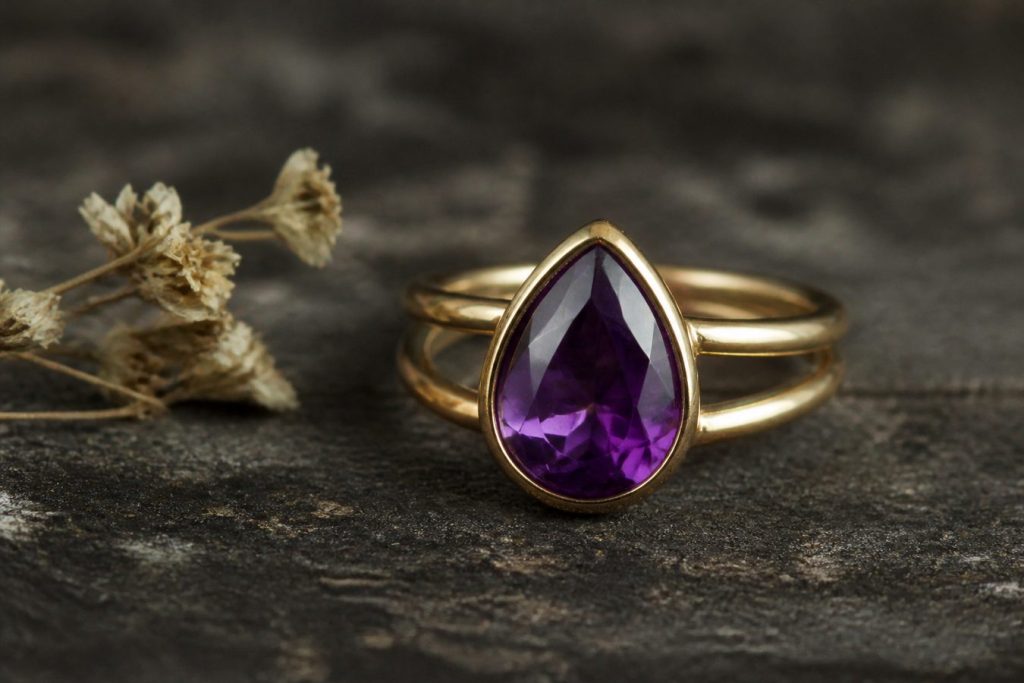
February birthstone jewelry centers on one stone: amethyst, the purple variety of quartz that has been worn as a talisman since antiquity. This guide covers what the February birthstone is, where it comes from, how to shop for it, and which amethyst sterling silver jewelry pieces make thoughtful gifts. We sell real natural-stone jewelry, so every note below reflects how the stone actually behaves on the hand and neck.
What Is the February Birthstone?
The February birthstone is amethyst, a macrocrystalline quartz with the chemical formula SiO2. Its purple color comes from trace iron and natural gamma irradiation inside the host rock, producing shades from pale lilac to deep "Siberian" violet with red and blue flashes. Amethyst measures 7 on the Mohs hardness scale, which makes it durable enough for rings, pendants, and daily-wear earrings.
Most commercial amethyst today comes from Brazil (Rio Grande do Sul and Pará), Uruguay (Artigas), and Zambia (Kariba mine). Uruguayan material tends toward deeper, bluish-purple saturation, while Zambian amethyst often shows strong red secondary hues. Brazilian stones cover the widest color range and the broadest price points.
Amethyst has been mined since at least 2000 BCE in Egypt, and the name traces to the Greek amethystos, meaning "not drunk." Ancient Greeks carved drinking vessels from it, believing the stone guarded against intoxication. It was also one of the twelve stones on the breastplate of the High Priest described in Exodus.
How to Choose Amethyst Sterling Silver Jewelry
Color drives value in amethyst more than clarity or carat weight. Look for even saturation without visible color zoning (bands of lighter and darker purple) when the stone is viewed face-up. Medium to medium-dark purple with a slight red or blue flash grades highest; very pale stones are abundant and should be priced accordingly.
Clarity matters too. Fine amethyst is typically eye-clean, meaning no inclusions visible at arm’s length. Faceted ovals, cushions, and emerald cuts show color best, while cabochons suit softer, translucent material and vintage-style settings.
Sterling silver (925) is the traditional setting metal for amethyst because the cool white tone sharpens the purple without warming it the way yellow gold can. Check that prongs sit flush against the stone and that the gallery underneath is open, which lets light pass through the pavilion and lifts the color. Our full catalog of sterling silver jewelry uses .925 silver with natural, untreated or heat-treated amethyst sourced from Brazil and Africa.
Avoid stones described only as "created," "synthetic," or "simulated" if you want a natural February birthstone. Lab-grown amethyst exists and is inexpensive, but it lacks the geological story most birthstone shoppers are looking for.
February Birthstone Necklace Gift Ideas
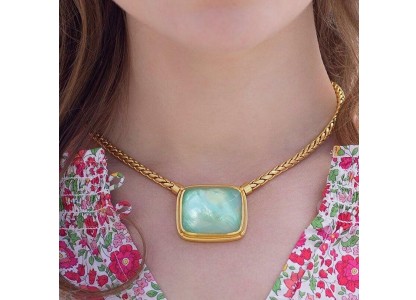
A February birthstone necklace gift works across ages and styles, which is why it tops our February sales every year. For a milestone birthday, a bezel-set oval amethyst pendant on an 18-inch box chain sits at the collarbone and layers cleanly with shorter chains. Bezel settings also protect the girdle of the stone from knocks, which matters for anyone who wears a necklace daily.
For a teen or first-birthstone gift, a small round amethyst (5mm to 6mm) in a four-prong martini setting keeps the price accessible while still using a real stone. Pair it with a 16-inch cable chain for a higher-sitting look that suits crewnecks and school uniforms.
For an anniversary or sympathy gift, look at larger pear or marquise cuts, 10mm or longer, set in a filigree or scrollwork frame. These read as heirloom pieces and photograph well, which matters if the gift is being sent long-distance. Our amethyst collection includes both minimalist solitaires and detailed vintage-inspired pendants under $100.
Matching sets (pendant plus stud earrings, or pendant plus a stackable ring) carry a lower per-piece cost than buying items separately and present well in a single gift box. If you are shopping for someone whose ring size you do not know, a necklace plus earring set is the safer pairing.
Caring for Amethyst Jewelry
Amethyst’s hardness of 7 handles daily wear, but prolonged exposure to sunlight or heat above about 200°F can fade the purple color permanently. Take off amethyst rings before gardening, beach trips, and oven work. Store pieces in a lined box or pouch away from windows.
Clean amethyst with warm water, a drop of dish soap, and a soft toothbrush. Avoid ultrasonic cleaners if the stone shows visible inclusions or fractures, since vibration can widen existing flaws. Steam cleaning is not recommended for amethyst set in silver because repeated thermal shock loosens prongs over time.
Sterling silver tarnishes when exposed to sulfur in air, rubber bands, and some lotions. A polishing cloth restores shine in under a minute, and storing silver in a zip-top bag with an anti-tarnish strip slows the process between wears. Rhodium-plated silver resists tarnish longer but will eventually need re-plating after several years of daily contact.
Shopping Notes for 2026
Rough amethyst prices from Zambian producers rose through 2024 and 2025 due to export changes, which has pushed finished-jewelry prices up roughly 10 to 15 percent at the retail level going into 2026. Brazilian material remains the best value for medium-grade color. If you are gift-shopping for February 2027 birthdays, ordering in January rather than the first week of February gives engravers and setters time to accommodate custom requests.
Questions about a specific stone, chain length, or ring size? Reach out through our contact page before ordering, and we will send additional photos of the exact piece under natural and indoor light.