
 Shop now, pay later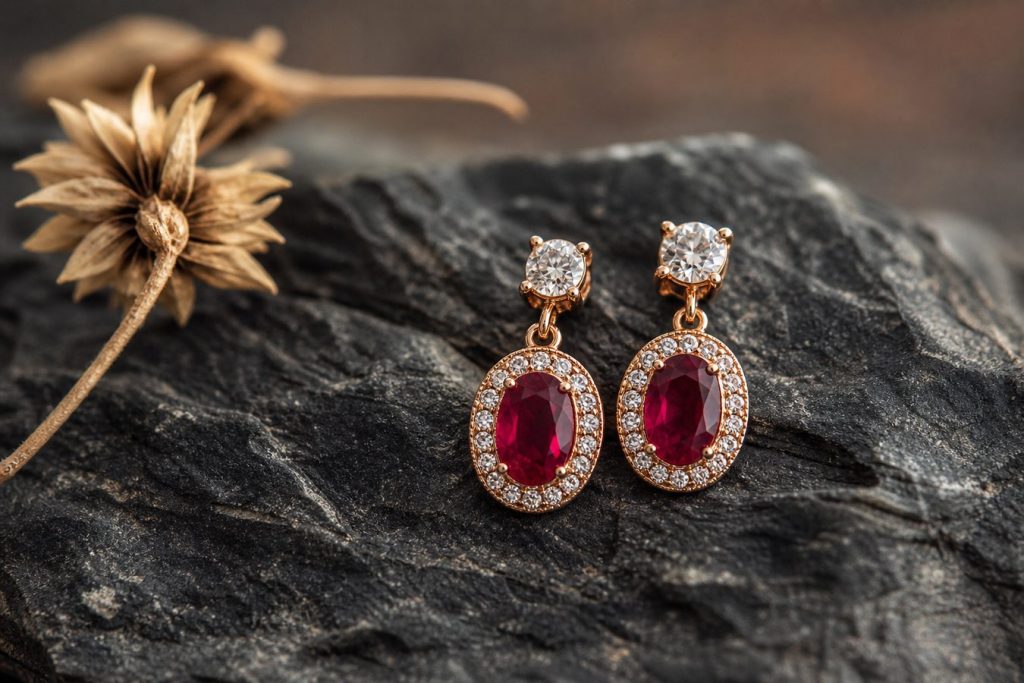
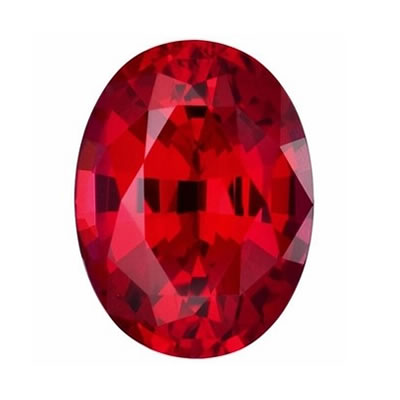
Natural ruby jewelry has held a steady place in fine jewelry boxes for over two thousand years, and the appeal hasn’t dimmed in 2026. Ruby is the red variety of the mineral corundum (aluminum oxide, Al₂O₃), colored by trace amounts of chromium. If you’re shopping for a real ruby piece you can trust, a few facts will save you money and frustration.
What Makes a Ruby a Natural Ruby
To be called a ruby, corundum must show a red hue caused by chromium. Pink, orange, or purplish stones from the same mineral family are classified as fancy sapphires, not rubies. The Gemological Institute of America (GIA) draws this line based on color saturation and tone.
Ruby scores 9 on the Mohs hardness scale, second only to diamond at 10. That hardness, combined with excellent toughness, makes ruby a practical choice for rings worn daily, not just special-occasion pieces. Only diamond, moissanite, and other corundum can scratch it under normal wear.
Natural rubies form in marble and basalt host rocks. Almost every natural stone shows inclusions under magnification, which gemologists call “silk” when the inclusions are fine rutile needles. A ruby with zero inclusions usually signals a synthetic or glass-filled stone.
Where Real Rubies Come From
The Mogok Valley in Myanmar (Burma) has produced rubies since at least the 6th century and remains the historical benchmark for the pure red sometimes called “pigeon’s blood.” Mozambique, particularly the Montepuez deposit found in 2009, now supplies the majority of commercial rubies on the global market.
Thailand, Madagascar, Sri Lanka, Vietnam, and Tanzania round out the main commercial sources. Sri Lankan rubies tend toward lighter pinkish-red tones, while Thai stones often show a darker, garnet-like hue from higher iron content. Origin affects price, but color quality matters more than country of origin for most buyers.
You can browse our ruby jewelry collection to see how different ruby tones look set in silver. We list stone origin where it has been disclosed by the supplier and stay quiet when it hasn’t, rather than guessing.
Treatments, Pricing, and What to Ask
Most rubies on the market today are heat-treated. Heating to roughly 1,800°C improves color and dissolves some silk inclusions, and the trade considers this treatment stable and acceptable. Unheated rubies with strong color carry a significant premium and should come with a lab report from GIA, AGL, or SSEF.
Lead-glass filling is a different matter. This treatment fills surface-reaching fractures with high-lead glass, which can crack or etch when exposed to household chemicals, ultrasonic cleaners, or a jeweler’s torch during repairs. Composite or “lead-glass-filled” rubies should be priced and disclosed accordingly, usually a small fraction of the cost of heat-only stones.
Before buying, ask the seller three questions: Is the stone natural corundum? What treatments has it received? Is there a lab report or in-house gemological assessment? A straightforward answer is a good sign. Vague language about “enhancement” without specifics is not.
Choosing Settings and Caring for Your Ruby
Sterling silver (92.5% silver, 7.5% copper) makes a strong, affordable setting for natural ruby. The cool gray of silver pushes the red of ruby forward visually, which is why so many of our customers prefer silver over yellow gold for color contrast. Prong, bezel, and halo settings all work well with ruby’s hardness.
For everyday wear, a bezel or half-bezel protects the girdle of the stone from knocks. Larger statement rings benefit from a sturdy four- or six-prong setting with good clearance for cleaning. We use rhodium plating on select pieces to slow tarnish on the silver itself; the ruby is unaffected either way.
Clean heat-treated rubies with warm water, mild dish soap, and a soft toothbrush. Skip the ultrasonic and steam cleaners if your stone is fracture-filled or if you’re unsure of the treatment history. Store ruby pieces separately, since a Mohs 9 stone will scratch almost everything else in your jewelry box.
Buying Natural Ruby Jewelry Online
Reddit threads and forum posts about real ruby jewelry usually circle the same concern: how do you know it’s genuine when you can’t hold it? Look for sellers who name the stone type plainly, list approximate carat weight and dimensions, show clear photos under neutral light, and have a return window long enough for independent appraisal.
SilverRush Style has sold real natural-stone sterling silver jewelry since 2005. Our ruby pieces use natural corundum, typically heat-treated unless noted, set in solid .925 silver with hallmark stamps. We don’t sell synthetic, simulated, or composite rubies under the “natural” label.
If you’re shopping for July birthstone gifts, a 40th anniversary piece (ruby is the traditional gift), or simply want red gemstone jewelry that will last decades, a natural ruby in sterling silver is a sensible starting point. Browse the collection when you’re ready, and reach out if you’d like specifics on any stone before you order.