
 Shop now, pay later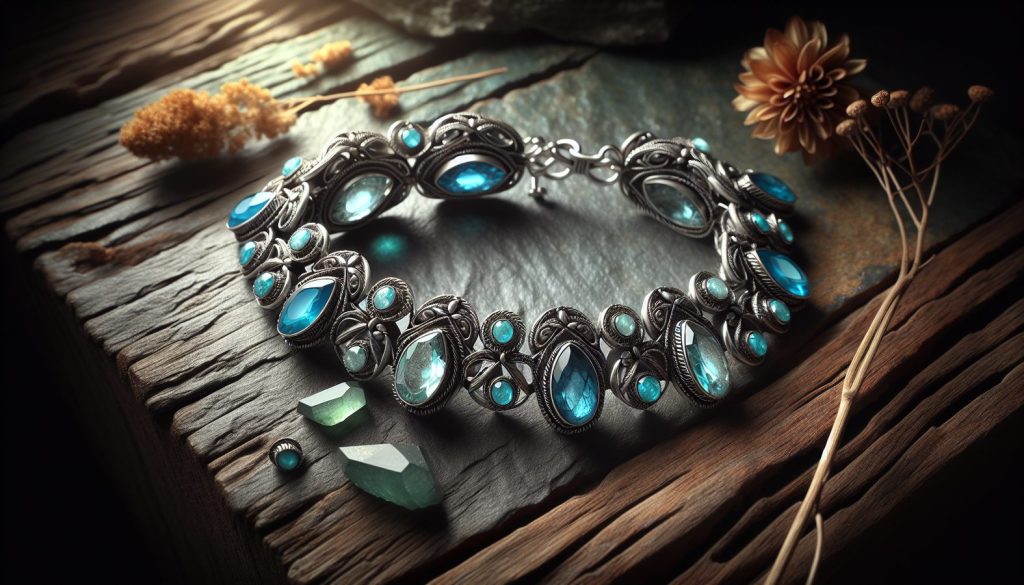
What does labradorite look like? At rest it reads as a gray, smoky, or near-black stone with a glassy surface, but tilt it toward a light source and broad sheets of blue, green, gold, or sometimes red and orange flash across the face. That optical effect is the signature of the stone, and it is the first thing to check when you want to identify a real piece.
What Is Labradorite, in Plain Terms
Labradorite is a plagioclase feldspar mineral with the chemical formula (Ca,Na)(Al,Si)4O8, sitting between albite and anorthite in the feldspar series. It was first described in 1770 from Paul’s Island near the town of Nain in Labrador, Canada, which gave the stone its name. Today most gem-grade material comes from Labrador, Finland (where the dark, full-spectrum variety is called spectrolite), Madagascar, and parts of India and Russia.
On the Mohs scale the labradorite stone measures 6 to 6.5, which is softer than quartz and calls for gentler handling than a sapphire or topaz. Specific gravity runs around 2.68 to 2.72, and the refractive index sits near 1.56 to 1.57. These numbers matter because they separate labradorite from glass, plastic, and dyed imitations a gem lab can spot in minutes.
What Does Labradorite Look Like Up Close
The body color of labradorite ranges from pale gray and smoky beige to steel gray, dark gray, and almost black. Inside the stone you will often see fine parallel lines or twin planes, called albite twinning, which look like faint striations running across the surface. Some stones also show small black needle inclusions of magnetite or ilmenite, and those inclusions are a good sign the material is natural.
The flash itself has a name: labradorescence. It is caused by light bouncing off microscopic layers inside the stone, and it appears as broad, sheet-like color rather than the tiny pinpoint sparkle you get from aventurine or sunstone. Blues and greens are the most common flash colors, with gold and copper tones appearing in many Madagascan stones and the full red-orange-violet range showing up in Finnish spectrolite.
Browse a well-cut piece of labradorite jewelry and you will notice the flash only lights up from certain angles. Rotate the stone and the color sweeps across the face, then disappears as you keep turning. A stone that glows evenly from every angle is almost never labradorite.
How to Identify Real Labradorite
Start with the angle test. Hold the stone under a single light source and tilt it slowly between roughly 20 and 40 degrees. Real labradorite shows a defined color flash that appears, spreads, and then fades as the angle changes, and the flash sits below the surface rather than on top of it.
Check the base color next. Genuine labradorite is translucent to nearly opaque with a gray, smoky, or black body, and light passes through the thinnest edges. Bright, saturated background colors with rainbow flash on top usually point to a man-made opalite or a coated glass doublet sold under misleading names.
Look at the shape and cut. Because the flash only lights up on certain crystal planes, cutters typically shape labradorite into ovals, rounds, pears, and free-form cabochons with a polished dome. Faceted labradorite exists but is less common, and perfectly matched pairs of highly saturated stones at bargain prices are a warning sign.
Finally, run a simple hardness and weight check. Labradorite feels cool and solid in the hand, noticeably heavier than plastic of the same size, and it will not scratch with a fingernail or a copper coin. If a stone scratches that easily, or if it feels warm and light, it is not the real mineral. You can see how natural stones are set in our broader collection of sterling silver jewelry for reference on cut, bezel work, and polish quality.
Caring for Labradorite Once You Own It
Given the 6 to 6.5 hardness, labradorite scratches against quartz dust, harder gems, and metal tool edges, so store each piece in a soft pouch or a lined box away from other jewelry. Clean it with warm water, a drop of mild soap, and a soft cloth, and skip ultrasonic cleaners, steam, and harsh solvents that can seep into any internal cleavage planes.
Take rings off before gardening, washing dishes, or workouts, since sharp knocks can chip the edge of a cabochon. Sudden temperature shifts, such as hot water on a cold stone, can also stress the feldspar structure. With normal care a well-set piece will keep its flash for decades, as owners of labradorite bought from our store back in 2005 can confirm.
If you are weighing a purchase, ask the seller for the origin, the treatment status, and a clear photo showing the flash from at least two angles. Honest answers and good photos tell you more than any marketing copy, and they are the quickest way to separate real labradorite from the look-alikes on the market in 2026.
Frequently Asked Questions
Is labradorite a rare stone?
Common gray labradorite is widely mined in Madagascar and Canada and is affordable. Top-grade spectrolite from Finland with full-spectrum red, orange, and violet flash is scarce and commands much higher prices.
Can labradorite get wet?
Brief contact with water during hand washing will not harm the stone. Avoid long soaks, hot water, chlorinated pools, and ultrasonic cleaners, since prolonged exposure can work into cleavage planes and dull the polish.
How can I tell labradorite from moonstone?
Moonstone has a white or near-colorless body with a soft blue or white glow called adularescence. Labradorite has a gray to black body with sharper, sheet-like flashes of blue, green, or gold.
Does real labradorite flash under any light?
It needs directional light, such as sunlight, a lamp, or a flashlight, hitting at the right angle. Under flat, even lighting with no single source the stone can look plain gray, which is normal for genuine material.