
 Shop now, pay later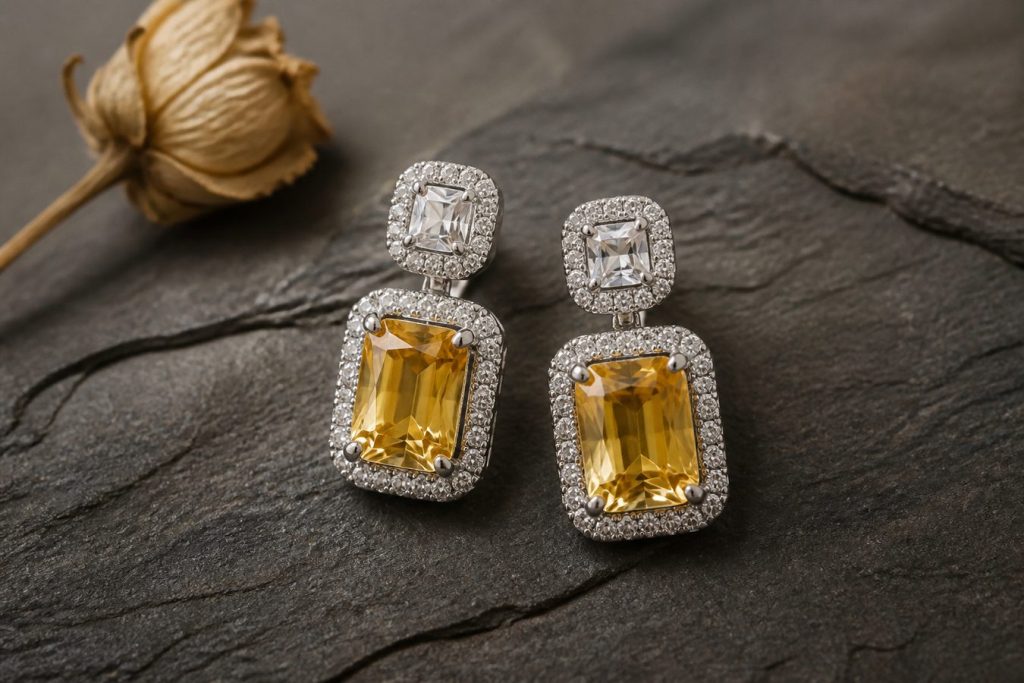
Shopping for silver earrings real enough to wear every day starts with one number: .925. That stamp means the metal is 92.5% pure silver alloyed with 7.5% copper, the standard definition of sterling silver set by U.S. Federal Trade Commission guides. Anything less, and you’re looking at silver plating over base metal, nickel blends, or “silver-tone” costume pieces.
At SilverRush Style, we’ve sold nothing but .925 sterling since 2005, and every pair we set with natural stones carries that hallmark. This guide covers how to verify real silver earrings, what tarnish actually is, and which gemstone pairings hold up to daily wear.
How to Confirm Silver Earrings Are Real
Start with the hallmark. Genuine sterling earrings carry a stamp reading .925, 925, or STG on the post, ear wire, or a small tag near the clasp. On stud backs the marking may sit on the butterfly clutch rather than the post itself.
A second check is weight and sound. Sterling feels denser than plated brass or aluminum of the same size, and a dropped sterling earring makes a soft ring rather than a dull clink. Neither test is foolproof on its own, so combine them with the hallmark.
The Nitric Acid and Magnet Tests
Jewelers verify silver with a small drop of nitric acid on an inconspicuous spot; real sterling turns creamy white, while plated metal flashes green. Silver is also non-magnetic, so a strong neodymium magnet held near the piece should produce no pull. If earrings stick to a magnet, the core is steel or nickel with silver coating.
Reputable sellers publish metal specs on every listing. Our sterling silver jewelry collection lists the .925 content, stone origin, and total weight for each pair, so you can cross-reference before buying.
Tarnish, Care, and Why Real Silver Darkens
Real silver tarnishes. That’s a chemistry fact, not a defect. The copper in the .925 alloy reacts with sulfur compounds in air, lotion, and perspiration to form silver sulfide, the dark film you see on older pieces.
Plated “silver” earrings often resist tarnish at first because the coating is rhodium or nickel, but that layer wears through in months and exposes the base metal underneath. Genuine sterling can be polished back to a bright finish indefinitely with a soft cloth or a mild silver dip.
Daily Habits That Extend Wear
Remove earrings before showering, swimming, or applying sunscreen and hairspray. Chlorine and sulfur-based cosmetics accelerate tarnish and can pit the metal over time. Store pairs in a zip-top bag with an anti-tarnish strip when they’re not in rotation.
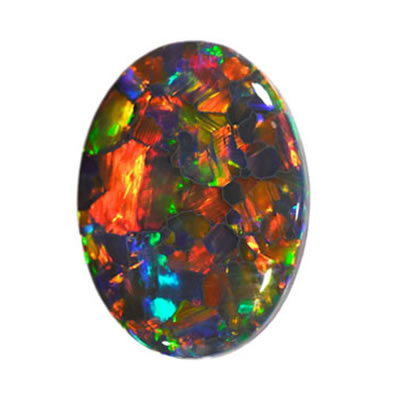
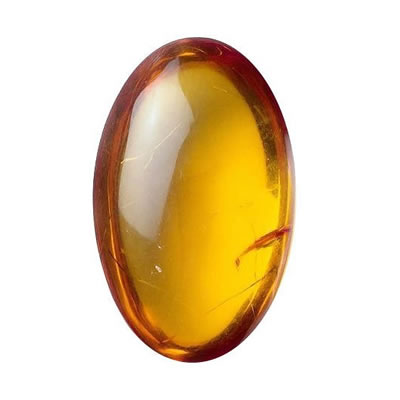
For stones, use a barely damp microfiber cloth and skip ultrasonic cleaners on softer materials like turquoise, opal, and amber. A quick wipe after each wear removes the skin oils that dull both metal and gemstone.
Natural Stone Pairings That Hold Up
Real silver earrings pair well with a wide range of natural gemstones, but hardness matters for daily wear. The Mohs scale ranks mineral scratch resistance from 1 (talc) to 10 (diamond), and stones below 5 need gentler handling.
Here are pairings we set most often, with verified hardness figures from the Gemological Institute of America:
- Amethyst (Mohs 7) — quartz variety, mined in Brazil, Uruguay, and Zambia; holds a polish well and resists everyday scratches.
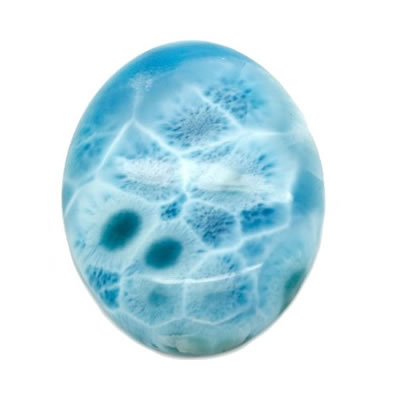
- Larimar (Mohs 4.5–5) — a blue pectolite found only in the Dominican Republic’s Barahona province; softer, so best in drop styles rather than studs that hit pillows.
- Turquoise (Mohs 5–6) — sourced from Arizona, Nevada, and Iran; porous, so keep it away from oils and cleaners.
- Moonstone (Mohs 6–6.5) — a feldspar with adularescence; Sri Lankan and Indian material shows the strongest blue sheen.
- Garnet (Mohs 6.5–7.5) — durable across almandine, pyrope, and rhodolite varieties from India, Mozambique, and Madagascar.
Our sterling silver jewelry catalog notes each stone’s origin and treatment status, since dyed or stabilized material behaves differently in cleaning.
Studs, Hoops, or Drops?
Studs suit softer stones because they sit flat and avoid snags. Hoops in .925 hold up under daily wear if the gauge is at least 1.5mm; thinner wire can bend at the hinge after months of use. Drop and dangle styles let you showcase larger cabochons without adding weight to the earlobe, since sterling weighs about 10.49 g/cm³ versus 19.3 for gold.
What to Ask Before You Buy
Three questions separate genuine silver earrings from marketing copy. First: is the hallmark visible in product photos, and does the description state .925 or 92.5% silver content? Vague phrases like “silver-finish” or “silver-plated brass” mean the piece is not sterling.
Second: what is the stone’s origin, treatment, and Mohs rating? A seller who can answer this has handled the material, not just resold a drop-shipped catalog. Third: what’s the return window if the earrings tarnish unusually fast or the stone loosens?
We’ve been answering those questions from our U.S. workshop for over two decades. Browse the current sterling silver jewelry selection when you’re ready to compare pairs, or reach out with the piece you’re considering and we’ll walk you through the specs.