
 Shop now, pay later
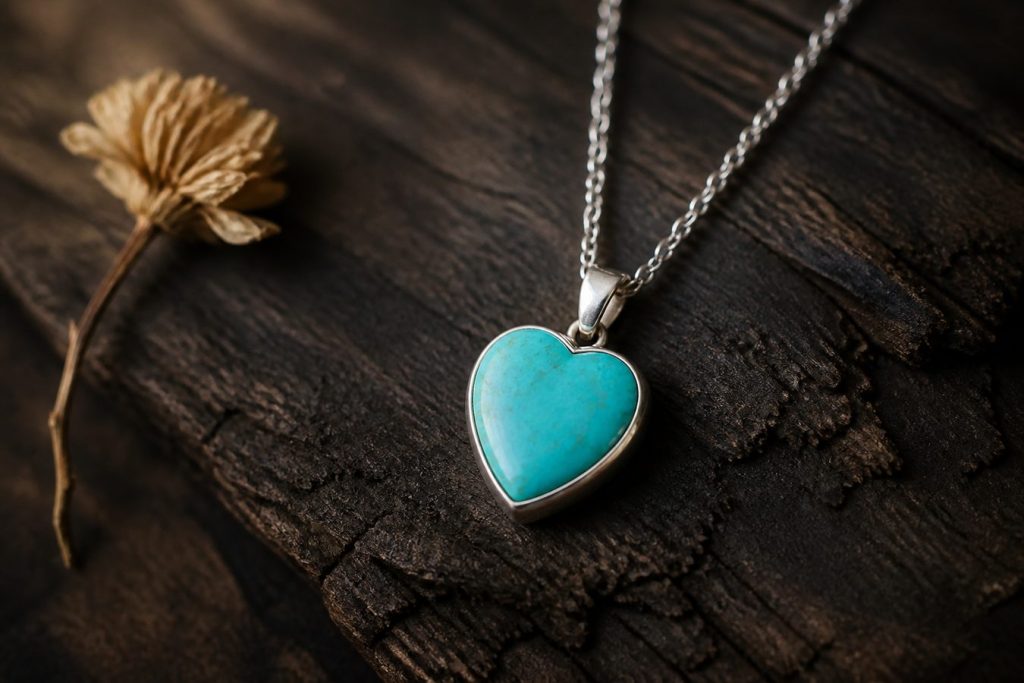
A genuine turquoise necklace pairs a 7,000-year-old gemstone tradition with the honest shine of 925 silver. At SilverRush Style, we have sold real natural-stone sterling silver jewelry since 2005, so we know what separates the real thing from dyed howlite or plastic imitations. This guide walks you through origins, authenticity checks, and daily care.
What Makes Turquoise Genuine
Turquoise is a hydrated copper aluminum phosphate with the formula CuAl6(PO4)4(OH)8·4H2O. It registers 5 to 6 on the Mohs scale, which is softer than quartz, so it needs gentle handling. The color ranges from sky blue to deep green, driven by copper and iron content inside the host rock.
Natural turquoise forms slowly in arid regions where groundwater percolates through copper-rich deposits. Most rough coming out of the ground is porous, so about 90% of commercial turquoise is stabilized with a clear resin to harden it without changing the color. Stabilized stone is still genuine turquoise; reconstituted block and dyed magnesite are not.
A quick field test: real turquoise feels cool to the touch and shows irregular matrix patterns from the host rock. Dyed howlite often has blue coloring that bleeds into the webbing lines, and the stone warms up fast in your hand.
Mines Worth Knowing by Name
Provenance matters because each mine produces a recognizable color and matrix. Collectors and Southwestern silversmiths often ask for stone by origin, so learning a few names helps you shop with confidence.
American Sources
Sleeping Beauty from Globe, Arizona is prized for clean robin’s-egg blue with little to no matrix; the mine closed to turquoise production in 2012, so remaining stock keeps climbing in value. Kingman, also in Arizona, has operated since the 1880s and yields bright blue stone with black or pyrite matrix. Royston from Nevada shows a green-to-blue gradient with brown host rock, while Number 8 and Cloud Mountain bring webbed spiderweb patterns that read almost like landscape paintings.
Global Sources
The Nishapur district in Iran has produced turquoise for over 2,000 years and sets the benchmark for solid sky-blue material. Hubei province in China supplies a large share of today’s market, often with fine spiderweb matrix. Smaller amounts come from the Sinai Peninsula, where Egyptian miners worked deposits as early as 3000 BCE.
Choosing a Necklace Style That Lasts
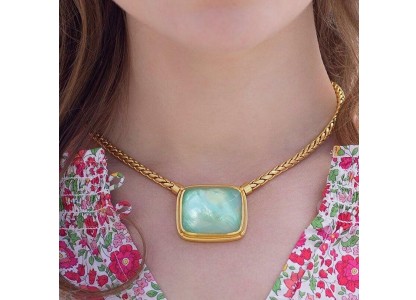
Pendants let a single cabochon take center stage, which works well with higher-grade stone where you want the color and matrix to show. A bezel setting in sterling silver protects the softer edges of the cab and resists catching on clothing. For daily wear, look for a bezel with a smooth, rolled lip rather than sharp prongs.
Beaded strands and Southwestern squash blossom designs put multiple stones to work. Heishi strands from Santo Domingo artisans use hand-cut discs that have been made in New Mexico for centuries. If you want versatility, a 16 to 18 inch sterling chain with a removable turquoise pendant moves from a tee shirt to a button-down without fuss.
Check the chain stamp before you buy. Real sterling will be marked 925, .925, or STER, and a reputable seller will name the stone source on the listing. Our full catalog of sterling silver jewelry lists both the metal purity and the stone treatment on every product page.
Care, Cleaning, and Longevity
Turquoise reacts to oils, perfume, lotion, chlorine, and prolonged sunlight. Skin oils can shift the color of untreated stone over years of wear, which some collectors enjoy and others want to avoid. Put your necklace on after applying fragrance and sunscreen, and take it off before swimming or showering.
Clean the stone with a soft, dry cloth. Skip ultrasonic cleaners, steam cleaners, and ammonia-based silver dips, since all three can strip stabilizing resin or crack the stone. For the silver, a polishing cloth with rouge compound handles tarnish without touching the setting.
Store the necklace flat in a lined box or soft pouch, away from harder stones like topaz or sapphire that can scratch the surface. A small anti-tarnish strip in the storage box slows oxidation on the silver between wears.
What to Ask Before You Buy
Three questions filter out most misrepresented pieces. First, is the stone natural, stabilized, or reconstituted? Second, what mine or region does it come from? Third, is the silver stamped 925 and does the seller offer a return window if the piece does not match the description?
Price is another signal. Genuine Sleeping Beauty or high-grade Kingman pendants typically start around $90 to $150 at retail; a sterling necklace with real turquoise priced at $20 is almost certainly dyed howlite or plastic. Reasonable prices reflect the raw stone cost, the silversmith’s labor, and the time spent sourcing legitimate material.
Browse our turquoise selection when you are ready to see what honest sourcing and 20 years of silversmithing look like side by side. Our team is happy to answer questions about any specific stone before you add it to your cart.