
 Shop now, pay later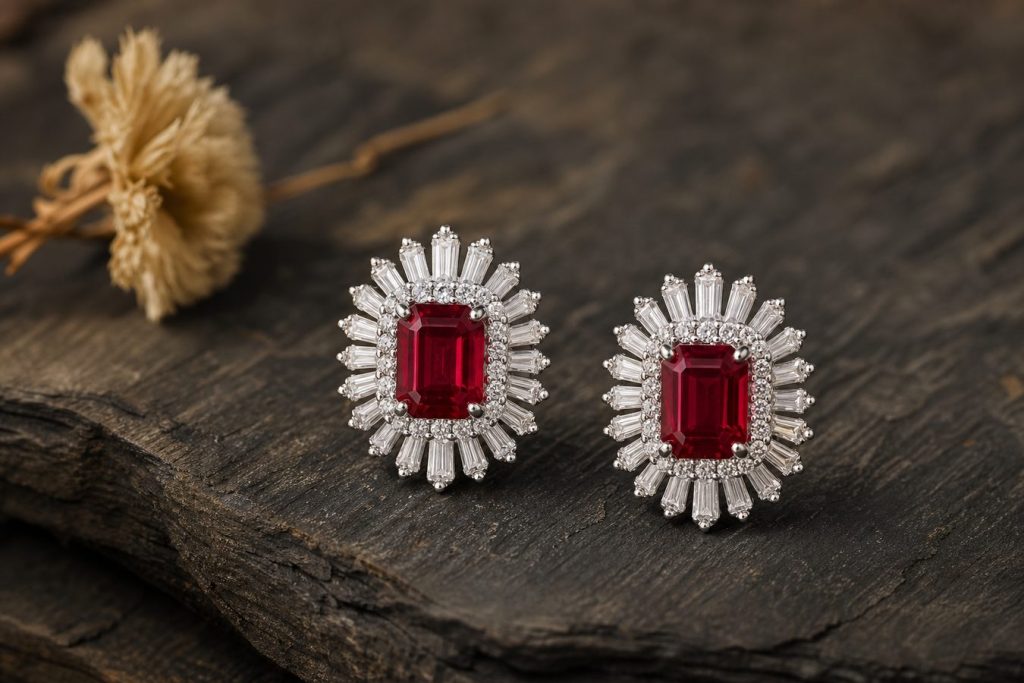
Genuine ruby jewelry starts with a red variety of the mineral corundum, colored by trace amounts of chromium. At SilverRush Style, we’ve been setting natural rubies in sterling since 2005, and the questions we hear most involve origin, treatment disclosure, and durability. This guide covers what actually matters when you shop for a real ruby piece.
What Makes a Ruby Genuine
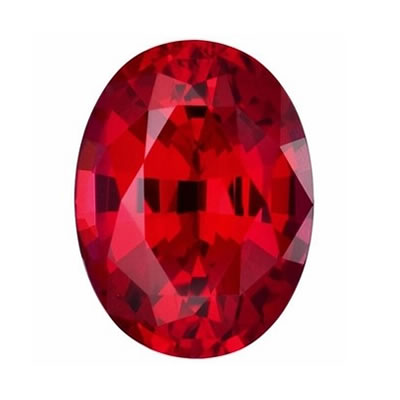
A genuine ruby is natural corundum (Al₂O₃) with enough chromium content to produce a red hue ranging from pinkish red to deep purplish red. Stones outside that range in the corundum family are classified as sapphires, which is why color grading matters in ruby pricing.
Ruby measures 9 on the Mohs hardness scale, second only to diamond at 10. That hardness makes it a practical choice for rings and bracelets, which see more knocks than pendants or earrings.
Most rubies on the market are heat-treated to improve color and clarity, a process accepted by the GIA and considered permanent. Untreated rubies with strong saturation are rare and command significant premiums; sellers should disclose treatment in writing.
Where Natural Rubies Come From
Historically, the Mogok Valley in Myanmar (Burma) produced the reference standard for ruby color, the so-called “pigeon’s blood” red. Mozambique overtook Myanmar in production volume after major finds at Montepuez in 2009, and now supplies a large share of the global market.
Thailand, Madagascar, Tanzania, and Sri Lanka also produce commercial quantities. Thai and African rubies often carry more iron, which shifts color toward darker or slightly brownish reds compared to the classic Burmese material.
Origin affects price, but a well-cut Mozambican ruby with strong red saturation can outperform a pale Burmese stone visually. Focus on the color and clarity you see, not just the country name on the certificate.
Ruby vs. Lookalikes and Synthetics
Red spinel, garnet (pyrope and almandine), and red tourmaline are natural stones sometimes confused with ruby. Spinel in particular fooled royal jewelers for centuries; the Black Prince’s Ruby in the British Imperial State Crown is actually a spinel.
Lab-grown ruby has the same chemistry and hardness as mined ruby but sells for a fraction of the price. It should always be labeled as synthetic, created, or lab-grown. Glass-filled composite rubies are a separate category: they contain lead glass to hide fractures and require careful handling since heat and household chemicals can damage the filler.
When you shop our ruby jewelry collection, each listing specifies whether the stone is natural, lab-created, or treated, along with the treatment type when applicable.
Quick Authentication Checks
Under 10x magnification, natural rubies show silk-like rutile needles, crystal inclusions, or growth zoning. Synthetics often show curved striae or gas bubbles instead of angular natural inclusions.
A jeweler’s UV light causes many rubies (especially Burmese) to fluoresce red, though this test isn’t definitive on its own. For higher-value stones, ask for a GIA, AGL, or SSEF report identifying species, treatment, and sometimes origin.
Choosing Settings and Sizes
Ruby’s hardness handles daily wear well, but the setting matters as much as the stone. Bezel and half-bezel mounts protect the girdle from chips, which is worth considering for rings worn every day.
Prong settings show more of the stone and let light enter from the sides, boosting apparent color in lighter rubies. Six-prong and double-prong designs offer a compromise between security and light exposure.
Sterling silver (925) sets off red rubies with cool contrast, while yellow and rose gold warm the tone. Our sterling silver jewelry uses rhodium plating on many pieces to slow tarnish and keep the metal bright against the stone.
Ruby is the traditional July birthstone and the gift for 15th and 40th wedding anniversaries, which drives most of the sizing and style requests we see. Round, oval, and cushion cuts remain the most requested shapes; pear and marquise sell more in pendants than rings.
Care and Cleaning
Warm water, mild dish soap, and a soft brush clean untreated and heat-treated rubies safely. Avoid ultrasonic and steam cleaners on glass-filled or fracture-filled stones, since both can damage the filler and expose the fractures underneath.
Store ruby pieces separately from softer stones like opal (Mohs 5.5–6.5) and pearl (2.5–4.5), which ruby can scratch. A lined jewelry box with individual compartments or soft pouches prevents contact damage.
Sterling silver settings tarnish over time from exposure to sulfur in air, cosmetics, and some foods. A polishing cloth restores shine; for deeper tarnish, a silver dip used briefly and rinsed thoroughly works, but keep dips away from porous or filled stones.
Before You Buy
Ask three questions: Is the stone natural or lab-grown? What treatments has it received? Is there a lab report or written disclosure? A seller who answers all three clearly is a seller worth buying from.
If you’re comparing pieces across shops, weigh color saturation, clarity, cut quality, and disclosure together rather than fixating on carat weight or origin alone. Browse our ruby selection when you’re ready to see specific stones with full treatment disclosure and sterling settings sized for everyday wear.